

Protesting your appraised value is one of the highest-return hours available to a Central Texas homeowner, and most people never do it. Here is the process.
The short version
- You protest the appraised value, not the tax rate, and the deadline is generally mid-May or thirty days after your notice.
- File even if you are unsure, and check both market value and unequal appraisal.
- Comparable sales, condition evidence and errors on the property record card are what move a value.
What you are actually protesting
You are not protesting your tax rate. Rates are set by the taxing entities: the school district, the city, the county, your MUD if you have one. You influence those at the ballot box, not at the appraisal district.
You are protesting the appraisal district's opinion of what your property was worth on January 1. That value, minus your exemptions, is what the rates get applied to.
The timeline
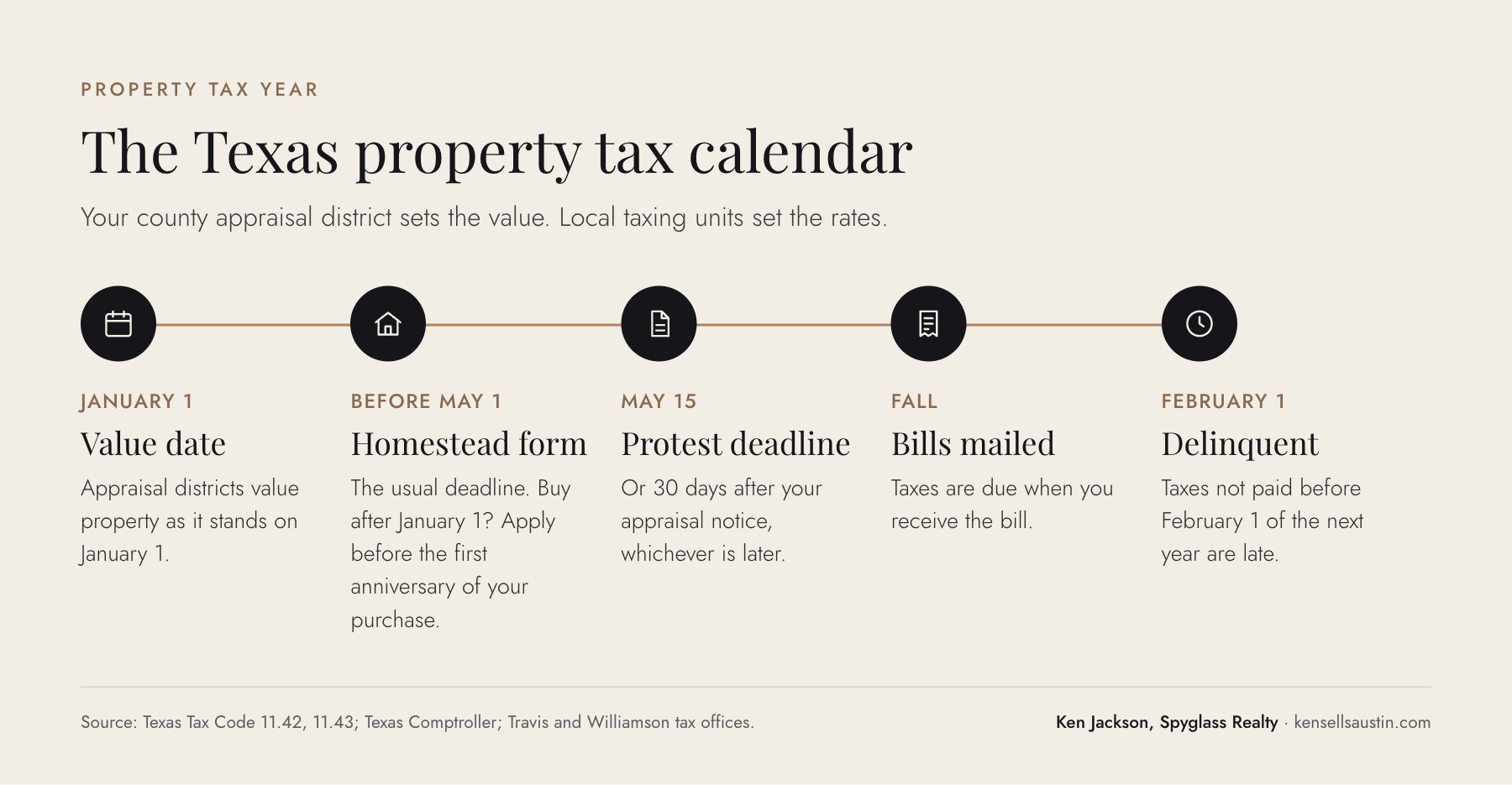
In the spring, the Williamson County Appraisal District mails a notice of appraised value. Read it the day it arrives.
The deadline to file a protest is generally mid-May, or thirty days after the notice was delivered, whichever is later. Miss the deadline and you are done for the year. File online through the appraisal district's portal. It takes a few minutes and you can always withdraw later.
File even if you are not sure. Filing costs nothing and preserves your options.
Filing costs nothing and preserves your options.
The two grounds
Market value. You believe the property is not worth what they say it is worth.
Unequal appraisal. You believe it is valued higher than comparable properties are. This is a separate and legitimate ground, and it wins cases where market value arguments do not.
Check both boxes when you file. It costs nothing to preserve both arguments.
The informal meeting is where many cases settle
Before any formal hearing you get an informal conversation with an appraiser. Show up prepared and many protests resolve right there.
What actually moves a value:
Comparable sales from around January 1, in your subdivision, adjusted for size and condition. This is where a REALTOR is useful: I can pull MLS comps for a specific address, which is better data than the appraisal district's mass model.
Condition evidence. Photographs and contractor bids. Foundation movement, a roof at end of life, dated systems, deferred maintenance. The district's model assumes average condition. If yours is not average, prove it.
The district's own record. Request their property record card and check the basics: square footage, year built, bathroom count, whether they think you have a pool you do not have. Errors are more common than people expect and they are the easiest wins.
Your own recent purchase. If you just bought at a price below their value, your closing statement is powerful evidence.
Taxes FAQ
More on exemptions, rates and MUDs is in the taxes and new construction buyer FAQ.
If it does not settle
You go to a hearing before the Appraisal Review Board, a panel of citizens. It is not a courtroom. Bring organized copies of your evidence, make your argument in a few minutes, and be specific. Emotion about your tax burden does not help; comparable sales do.
Beyond the ARB there are further appeal routes, including binding arbitration and district court, which start to make sense only on higher-value properties. A property tax consultant or attorney can advise on those routes.
Do it every year
This is not a one-time task. Values are reset annually, and a successful protest one year does not carry forward. Put it on the calendar.
And make sure your homestead exemption is on file, because the appraisal cap it provides does more for you long-term than any single protest will.
If you want comps for your address before you protest, ask me and I will pull them. I do this for past clients every spring and I am happy to do it for you.
Keep reading
Questions about this? Talk to Ken.
Call (737) 307-4848 or send Ken a message.
