

The public version of this job is opening front doors. That is a small part of it, and it is the part a website can already do for you.
Here is the rest.
The short version
- A buyer's agent's real work starts after you are under contract, not at the front door.
- Since January 1, 2026, you sign a written agreement before being shown homes, and the compensation is negotiable.
- Know in writing what your representation costs and who is expected to pay it before you tour anything.
Before you are under contract
Telling you which houses not to see. A good agent in this corridor should be able to look at a listing and say why it has sat, what the tax rate on that parcel actually is, whether that street floods, which builder built it and how their 2018 work has held up.
Reading the neighborhood, not the listing. School attendance boundaries do not follow city lines in Leander ISD, and they move. Two houses a quarter mile apart can feed different schools. That question gets asked too late constantly.
Structuring the offer. Price is one variable. Option period length and fee, earnest money, closing date, leaseback, what conveys, how much of your financing risk the seller has to carry. All of it is negotiable and all of it affects whether your offer wins.
After you are under contract
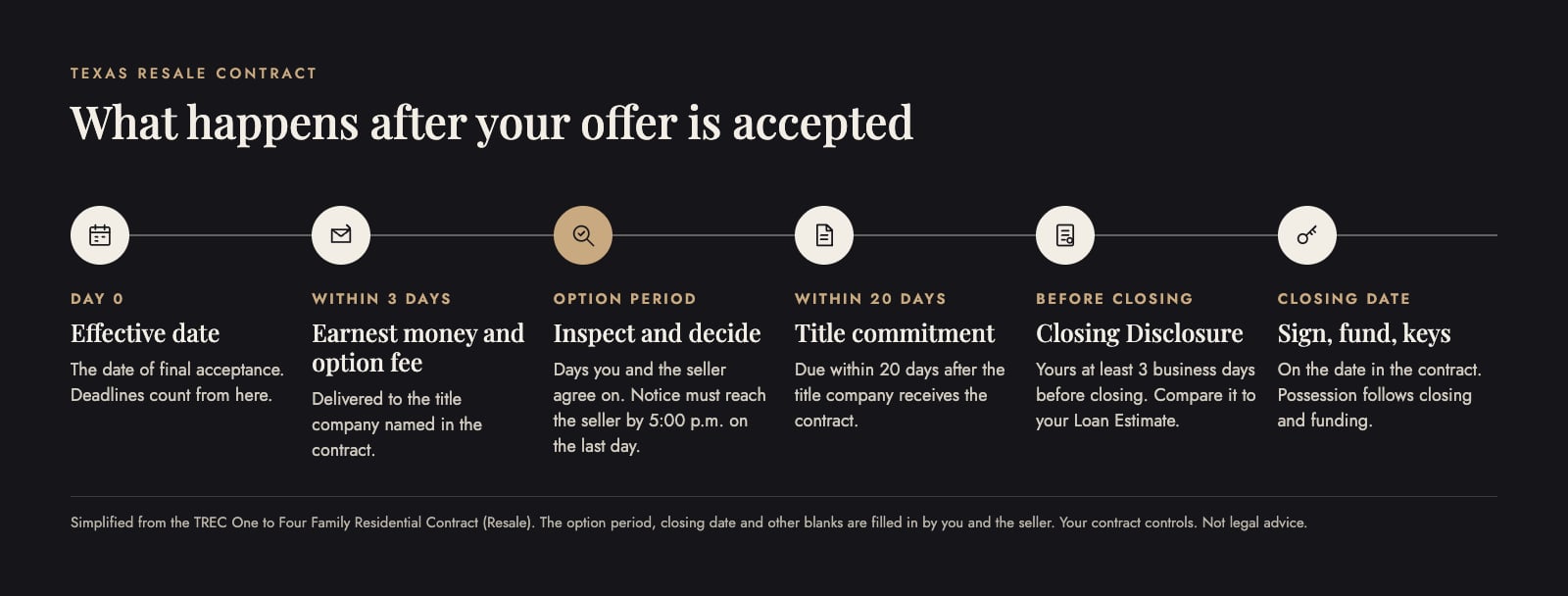
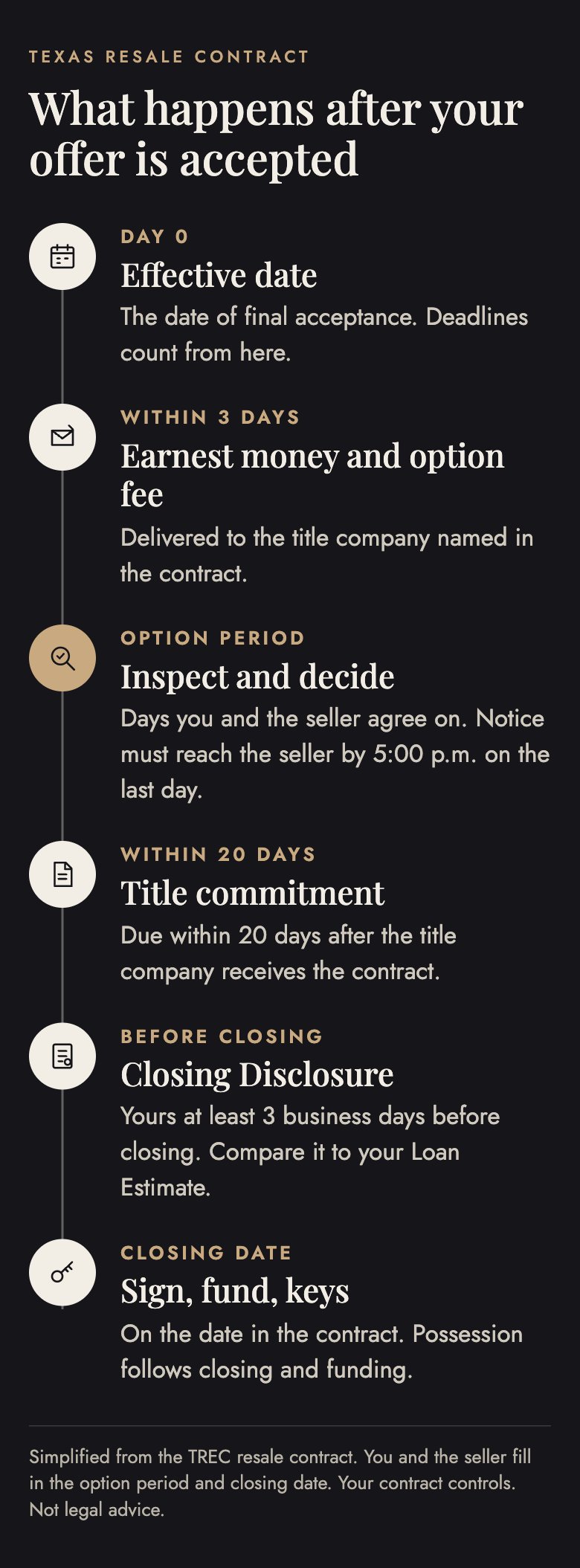
This is the actual job. The option period is short and there is a lot to get done inside it: the right inspector, specialists if the general inspection turns something up, the real tax rate, a real insurance quote, HOA documents read rather than skimmed, the survey checked against the fences.
Then the repair negotiation, the appraisal, the lender's conditions, the title commitment, the walkthrough, and the dozen small things that go wrong between contract and closing and have to be fixed without blowing up the deal.
If your agent disappears after the contract is signed, you hired the wrong one.
If your agent disappears after the contract is signed, you hired the wrong one.
Who pays
This has changed and buyers should understand it clearly.
Since January 1, 2026, Texas requires you to sign a written buyer representation agreement before your agent shows you homes. A showing-only agreement is allowed. It is non-exclusive and runs 14 days or less. That agreement states what your agent will be paid and how. It is a real document with real terms, and the compensation is negotiable, and the agreement has to say so. It always was, but now it is explicit and in front of you.
The money can come from several places. A seller may offer to cover buyer agent compensation as part of the deal. It can be negotiated into the contract as a seller concession. Or the buyer can pay it directly. Which of these applies is deal-specific, and it is a conversation to have with your agent up front rather than at closing.
The practical effect: you should know, in writing, what your representation costs and who is expected to pay it, before you tour anything.
Buyers guide
Everything from first showing to closing is laid out step by step in the Texas buyers guide.
What to ask before you sign with anyone
How many transactions have you closed in this specific corridor in the last year?
What is the tax rate on this parcel, and is it in a MUD? If they cannot answer that here, keep looking.
Who handles my file during the option period, you or an assistant?
What are the terms of your representation agreement, and what is negotiable?
The honest test
A buyers agent should have talked you out of at least one house by the time you close. If everything you liked was great, nobody was actually representing you.
If you want to know how I work before committing to anything, just ask.
Keep reading
Questions about this? Talk to Ken.
Call (737) 307-4848 or send Ken a message.
