

Closing costs are the part of a Texas transaction people budget for least and get surprised by most. Here is the plain version.
The short version
- Almost none of this is fixed by law: custom sets defaults and the contract overrides custom.
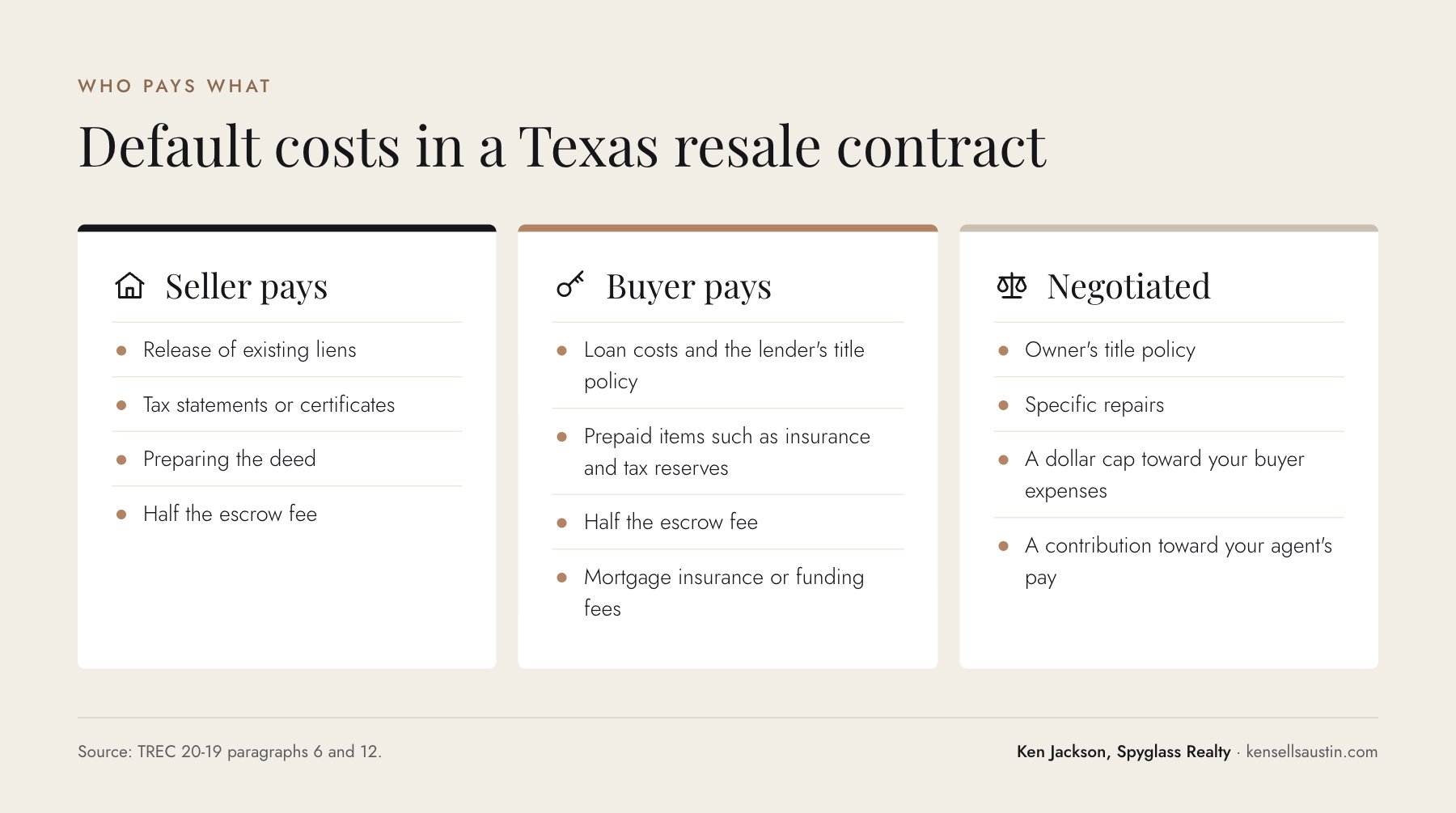
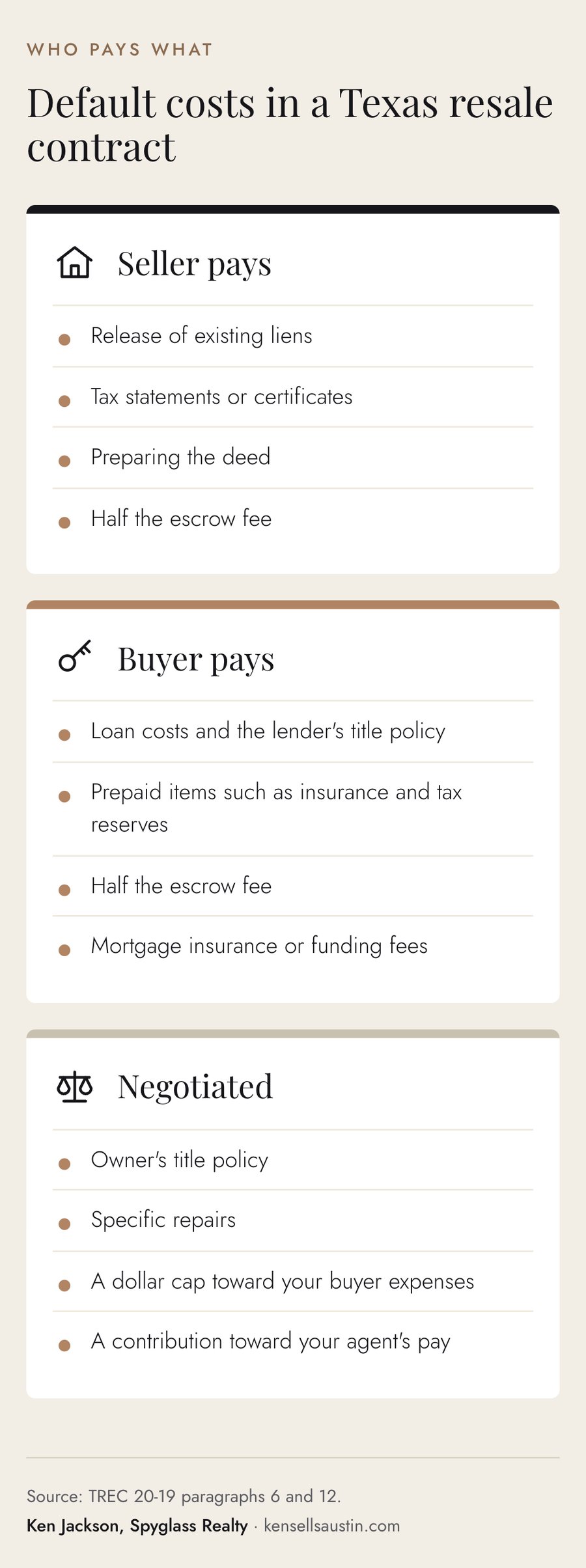
- Buyers customarily pay lender costs, prepaids and escrow; sellers customarily buy the owner's title policy.
- A seller concession toward your closing costs can beat a price cut, within your loan's limits.
The important thing first
Almost none of this is fixed by law. Custom sets the defaults, and the contract overrides custom. Every line below is negotiable, and in a slower market a meaningful share of it routinely shifts from buyer to seller.
What the buyer customarily pays
Lender costs. Origination, underwriting, discount points if you buy the rate down, credit report, and the appraisal. This is usually the largest block.
Prepaids and escrow. Not really a fee. This is your own money going into an escrow account for the first year of property taxes and homeowners insurance, plus prepaid interest to the end of the month. In Texas this is a big number because property taxes here are high. Buyers routinely underestimate it.
Title and closing fees on the buyer's side: the escrow fee split, recording, and the lender's title policy, which is normally issued at a low simultaneous rate when the seller is buying the owner's policy.
Survey. Sometimes. If an existing acceptable survey exists, the seller may provide it. If not, someone pays for a new one, and who pays is negotiated in the contract.
Inspection. Paid directly, outside closing, during the option period.
Closing costs guide
Every closing cost, line by line, is in the Texas closing costs buyer guide.
What the seller customarily pays
The owner's title policy. In most of Texas, custom has the seller buying the owner's title policy for the buyer. This is a real cost and it is one of the larger seller line items. It is also negotiable, and in some parts of the state custom runs the other way.
Their side of escrow and closing fees, plus the payoff of any existing loans, prorated property taxes for the portion of the year they owned the home, and any HOA transfer fees the contract assigns to them.
Agreed repairs and concessions negotiated after inspection.
Real estate commission as agreed in their listing agreement, and any buyer agent compensation the seller has agreed to cover. How that works now.
Tax prorations confuse everyone
Texas property taxes are paid in arrears. At closing, the seller credits the buyer for their share of the year's taxes up to the closing date, and the buyer pays the full bill when it comes due. This is not a fee, it is an accounting adjustment, and it is why the seller's proceeds and the buyer's cash to close both look different than people expect.
In a new subdivision there is a second wrinkle: if the parcel was still taxed as raw land last year, the escrow estimate can be badly low and your payment can jump after the first full reassessment. Ask about this specifically on new construction.
This is not a fee, it is an accounting adjustment, and it is why the seller's proceeds and the buyer's cash to close both look different than people expect.
What actually moves the number
Seller concessions. In a market with inventory, asking the seller to cover a defined dollar amount of your closing costs is common and often more valuable than an equivalent price reduction, because it reduces the cash you need on the table rather than shaving a few dollars off a monthly payment.
There are limits on how much a seller can contribute depending on your loan type and down payment. Your lender will tell you the ceiling. Know it before you write the offer.
Get the real number early
Your lender must provide a Loan Estimate shortly after application. Read it. Then ask the title company for a preliminary settlement statement once you are under contract, and reconcile the two.
If you want me to walk through the estimate on a specific house before you write, send it over. I would rather you know now than at the table.
Keep reading
Questions about this? Talk to Ken.
Call (737) 307-4848 or send Ken a message.
