
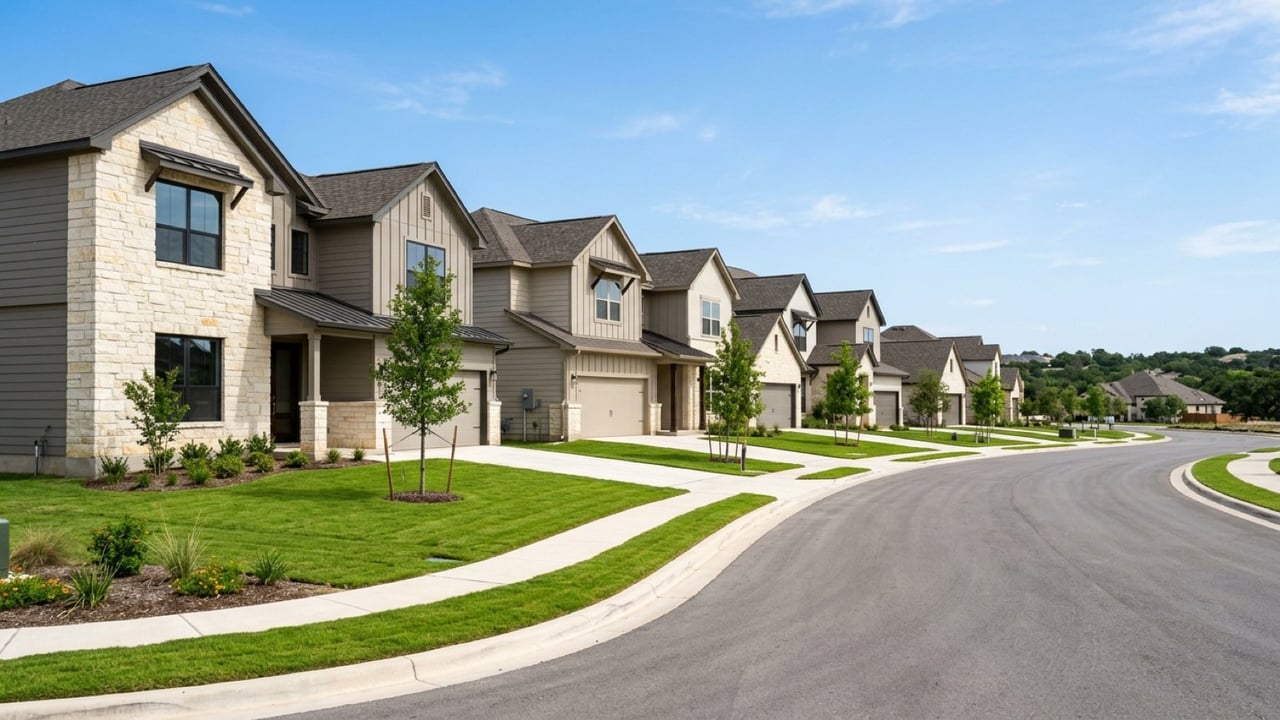
Texas values property as of January 1. If your new house was a lot or a frame on that date, your first tax bill is based on that, and the next January 1 the appraisal district values the finished house. The 10 percent homestead cap does not start until the year after you first qualify for the homestead exemption, and it never limits the value of new improvements. That is why the second bill on a new build can be far higher than the first.
The short version
- Your first bill reflects whatever stood on the lot on January 1.
- The homestead cap starts the year after you first qualify, and new improvements are added on top of it.
- Estimate taxes on the finished value at current rates, including any MUD or PID, before you sign.
Key facts, checked October 15, 2026
- All taxable property is appraised at its market value as of January 1. Source: Texas Tax Code Chapter 23 (Sections 23.01, 23.23).
- The homestead cap limits the appraised value to last year's appraised value plus 10 percent, plus the market value of all new improvements. Source: Texas Tax Code Chapter 23 (Sections 23.01, 23.23).
- The cap takes effect on January 1 of the tax year after the first tax year the owner qualifies for the homestead exemption. Source: Texas Tax Code Chapter 23 (Sections 23.01, 23.23).
- 2026 MUD rates per $100 include Leander MUD #1 at 1.000000, Northwest Williamson County MUD #1 at 0.950000 and Round Rock MUD #1 at 0.680000. Source: Williamson County Tax Assessor-Collector, 2026 Tax Rate Information (Truth in Taxation Summary).
Year one is often a partial value
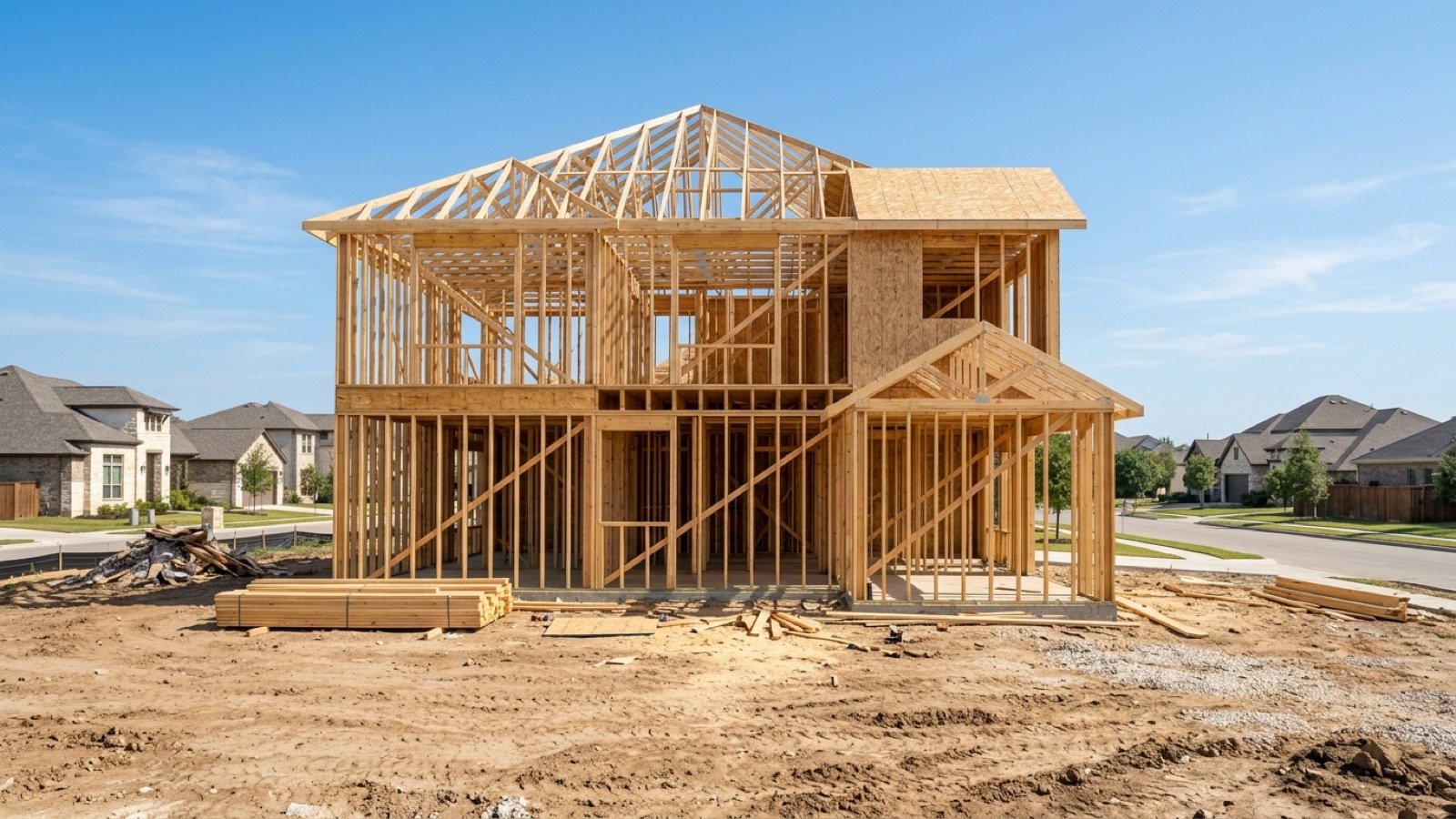
Tax Code 23.01 is short: taxable property is appraised at its market value as of January 1. On a new build, that usually means the builder owned a lot, a slab or a frame on that date, and the appraisal district values what was there. Your first tax statement follows that value, even though you closed on a finished house later in the year.
The next January 1, the district values the finished house and lot. Nothing about the rate has to change for the bill to jump. If the builder's tax estimate was based on the lot value, it was never your number.
Why the homestead cap does not help in year two
Tax Code 23.23 caps a homestead's appraised value at the lesser of market value or last year's appraised value plus 10 percent, plus the market value of all new improvements. Two details matter for a new build. First, the cap takes effect the year after you first qualify for the homestead exemption. Second, a house finished during the year counts as a new improvement, so its value goes in on top of the cap.
Once the house is finished and the cap is in effect, later years are limited to the 10 percent rule. Year two is the reset.
Comparing new construction towns
Builder activity, lot sizes and tax setups by town are compared in best Austin suburb for new construction.
MUDs and PIDs add their own line
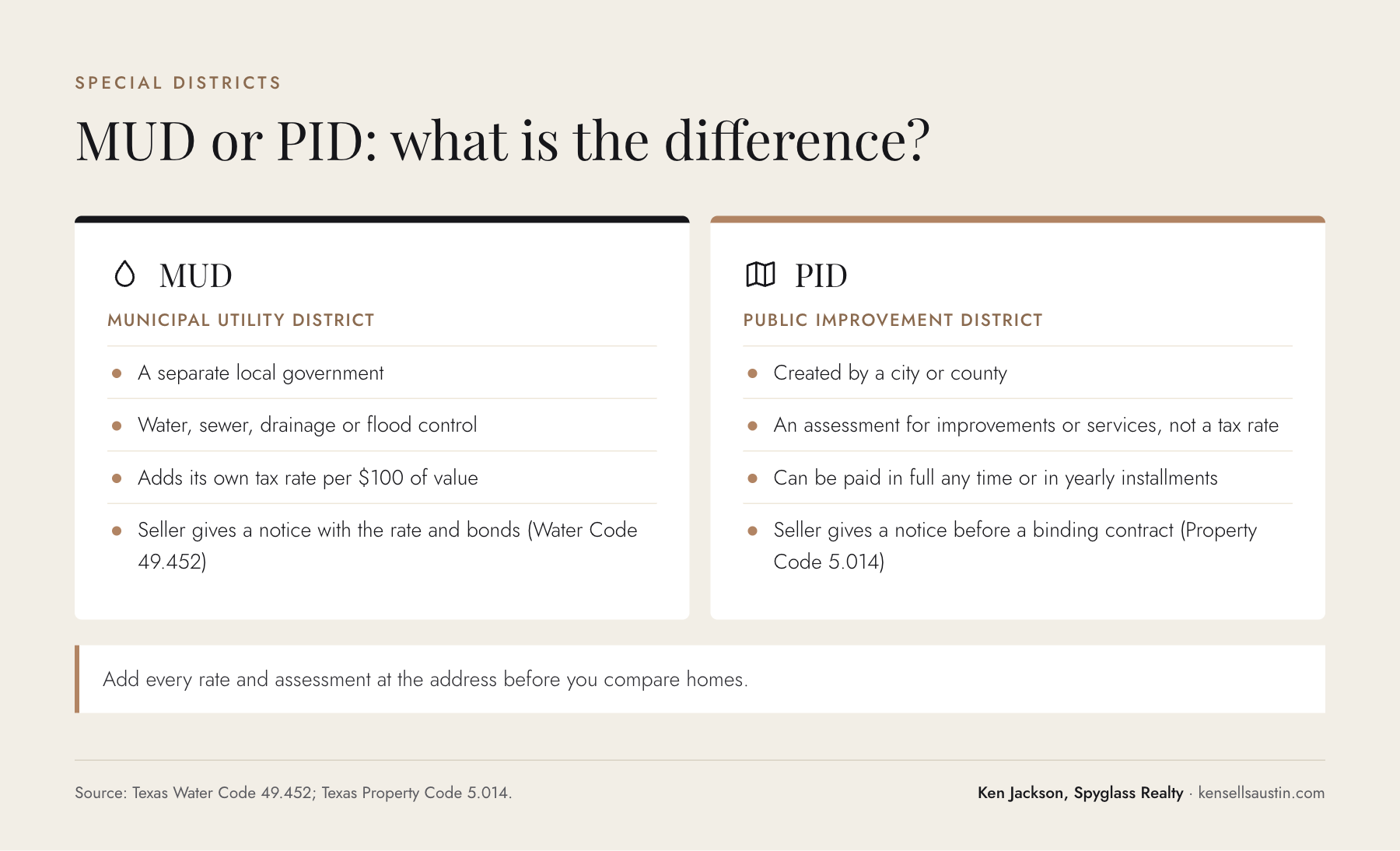
Many new subdivisions sit in a municipal utility district or a public improvement district. The Williamson County 2026 table lists dozens of MUDs, and some MUD rates are higher than the city and county lines combined. A few examples from that table:
District | 2026 adopted rate per $100 |
|---|---|
Leander MUD #1 | 1.000000 |
Leander MUD #3 | 1.000000 |
Northwest Williamson County MUD #1 | 0.950000 |
West Williamson County MUD #1 | 0.714000 |
Round Rock MUD #1 | 0.680000 |
South East Williamson County MUD #1 | 0.494000 |
From the Williamson County Tax Assessor-Collector's 2026 table. A MUD applies only to parcels inside it.
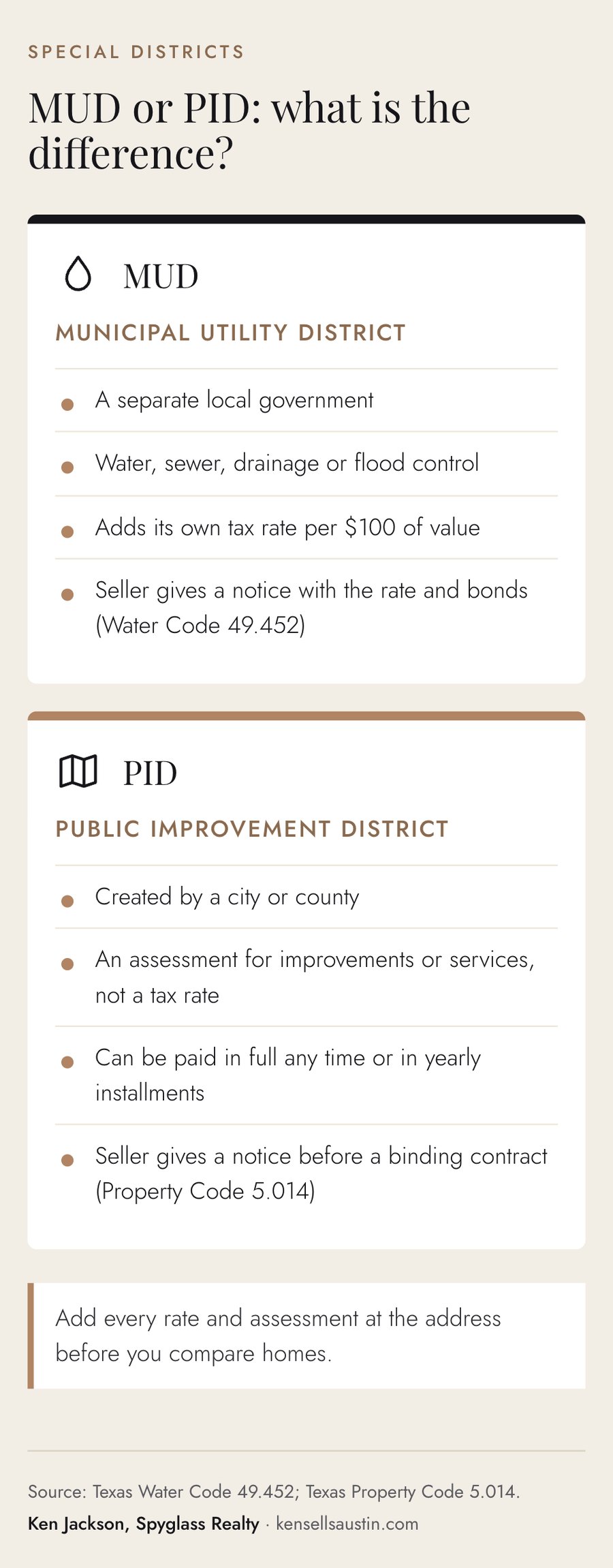
A PID is usually an assessment rather than a rate. My MUD and PID guide shows how each one shows up on the bill and in the disclosures.
What to do before and after you close
Before you sign, ask the builder for the parcel number, look up the January 1 record, and estimate the tax on the finished value using the 2026 rates for every line, including any MUD or PID. Ask your lender to set the escrow on that finished value, not the lot value, so the first escrow review is not a shock.
After you close, file the homestead exemption. If you closed after January 1 and the builder did not have the exemption, you can get it for the rest of that year. Then watch the appraisal notice the next spring. If the value looks wrong, the protest deadline is May 15 or 30 days after the notice arrives, whichever is later.
For more on buying new, read buying new construction in Texas and new construction vs resale in Leander.
FAQ
Questions people ask
Why did my property taxes go up so much in the second year of a new build?
Texas values homes as of January 1. If the house was unfinished on that date, the first bill used a partial value. The next January 1, the finished house is valued, and new improvements are not limited by the homestead cap.
Does the 10 percent homestead cap apply in my first year?
No. Under Tax Code 23.23(c), the cap takes effect on January 1 of the tax year after the first year you qualify for the homestead exemption.
Can I protest the value of a new build?
Yes. File with the appraisal review board by May 15 or 30 days after your appraisal notice is delivered, whichever is later, under Tax Code 41.44.
How do I know if a new home is in a MUD?
Check the parcel's taxing units on the appraisal district record and the tax statement, and read the MUD notice in the contract. The Williamson County rate table lists each MUD's adopted rate.
Keep reading
Sources
- Texas Tax Code Chapter 23 (Sections 23.01, 23.23)
- Texas Tax Code Section 41.44
- Williamson County Tax Assessor-Collector, 2026 Tax Rate Information (Truth in Taxation Summary)
- Texas Comptroller, Property Tax Exemptions
- Texas Comptroller, Property Tax Basics
Every figure above was checked on the official page on October 15, 2026. Rates and rules change; the linked source is the final word. Reviewed by Ken Jackson, REALTOR, Spyglass Realty, TREC #754679.
Questions about this? Talk to Ken.
Call (737) 307-4848 or send Ken a message.
