
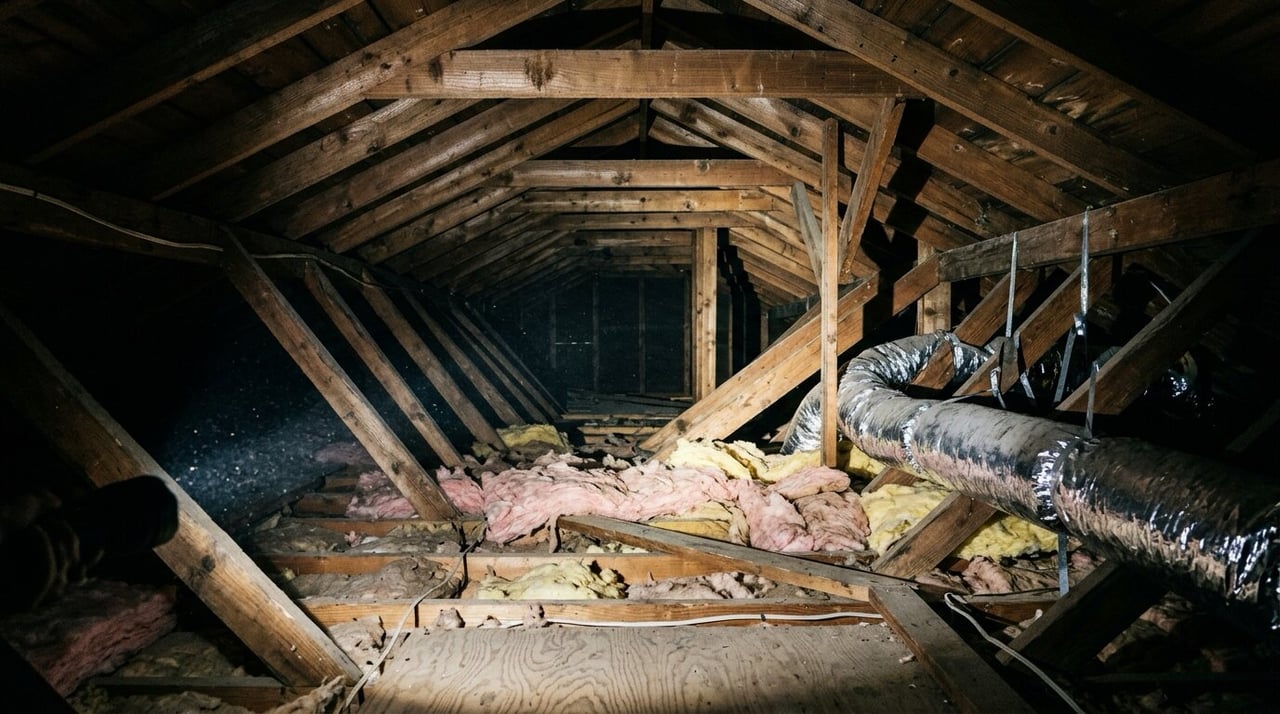
The inspection is the most useful money you will spend on a house, and it is routinely misused. Here is what it is for.
The short version
- A Texas inspection reports what is visible and accessible on a standard state form. It does not open walls or check code.
- Foundation, roof and hail, drainage and older sewer lines are the Central Texas items to press on.
- Walk the inspection, sort findings into three buckets and ask the seller only for what matters, inside the option period.
What a Texas inspection actually is
Texas licenses home inspectors and standardizes the report. Your inspector works from a state form and reports each system as inspected, not inspected, not present, or deficient. That standardization is genuinely useful. It means you can compare reports and it means the inspector has a defined scope rather than an opinion.
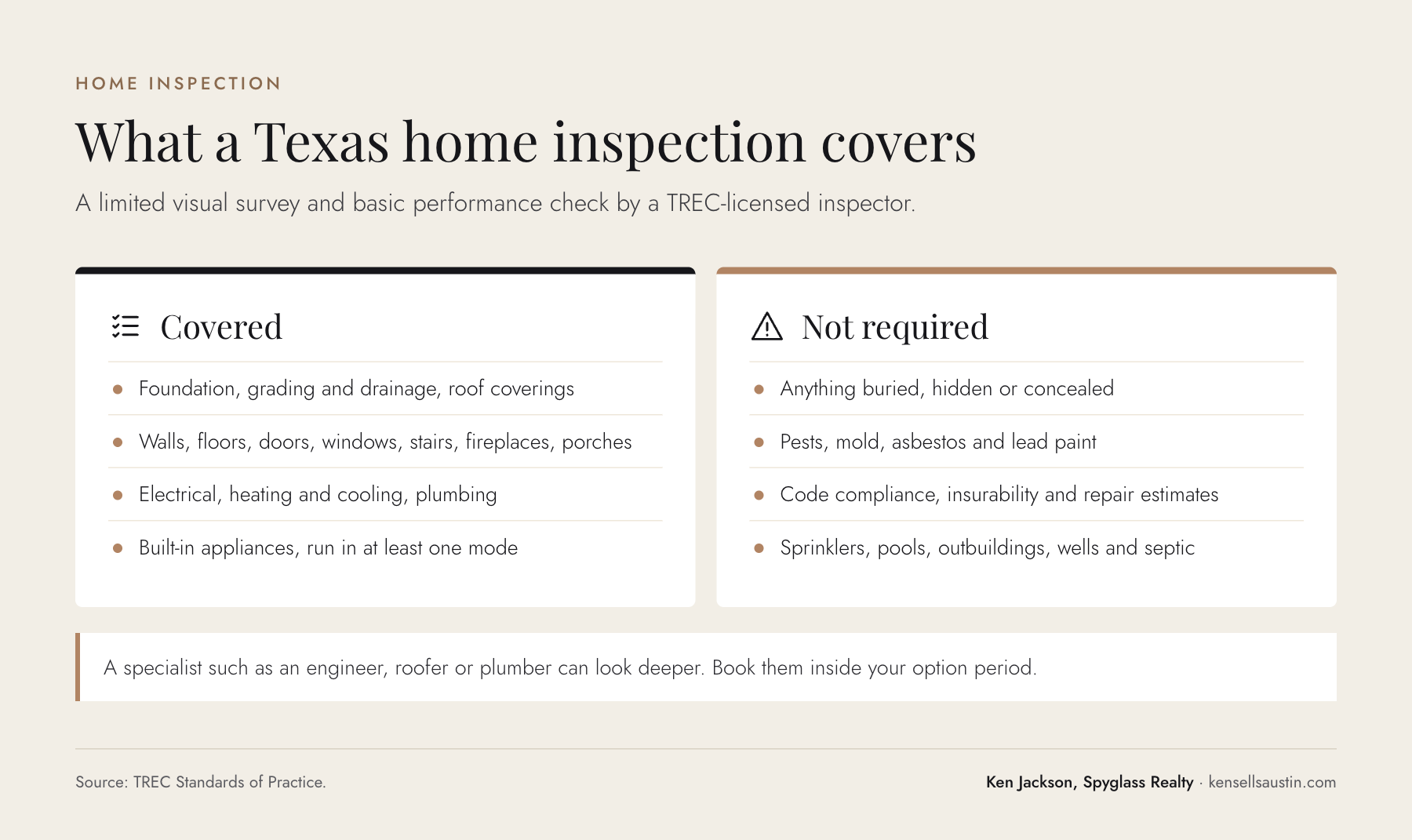
Broadly, the inspector looks at what is visible and accessible: structural components, the roof and attic as far as they can safely reach, the foundation from what is observable, walls and ceilings, doors and windows, the electrical system, HVAC, plumbing supply and drainage, water heater, and installed appliances.
What it does not cover
This is the part that catches people.
Anything not visible. Inside walls, under slabs, behind finished surfaces. An inspector does not open up your house.
Anything not accessible. A crawl space full of stored boxes, an attic without safe footing, a roof too steep or too wet to walk.
Code compliance. An inspection is not a code inspection. A house built to 1998 code is not defective for not meeting 2024 code.
Life expectancy. An inspector reports that the HVAC works today. They are not promising you five more years.
Specialty systems unless separately contracted: sewer lines by camera, pools and spas beyond the basics, wells and septic, sprinkler systems in some cases, and anything requiring a licensed specialist to open up.
An inspection is not a code inspection.
The Central Texas specifics
Foundation. This is the big one here. Expansive clay soils across Central Texas move with moisture, and slab foundations move with them. Cosmetic cracks are normal and often meaningless. Real movement is not. If your general inspector flags anything on the foundation, get a structural engineer during the option period. An engineer's letter is worth many times a general inspector's note, both for your decision and for any negotiation.
Roof and hail. This is hail country. Ask specifically about the roof's age, whether it has been replaced after a storm, and whether any claim was filed. Then get your insurance quote on that specific roof before your option period closes.
Drainage. Watch how the lot sheds water away from the slab. Grading that pushes water toward the house is a foundation problem waiting to happen, and it is cheap to fix now and expensive to fix later.
Sewer scope on older homes. Cast iron lines in mid-century Austin-area homes fail. A camera scope is inexpensive relative to what it can save you.
Inspections FAQ
Foundation, flood and inspection questions are answered in the Texas buyer FAQ on inspections, flood and foundation.
How to use the report
Go to the inspection. Walk it with the inspector. You will learn more in ninety minutes standing in the house than in an hour reading the PDF.
Then sort the findings into three buckets: things that change whether I want this house, things that change what I will pay for it, and things I will fix myself over the next five years. Most of the report is bucket three.
The mistake is handing the seller a list of forty items. That is not a negotiation, it is noise, and it makes sellers dig in. Ask for the things that matter.
All of this has to happen inside the option period, which is why scheduling the inspection on day one matters. If you want help reading a report on a specific house, send it to me.
Keep reading
Questions about this? Talk to Ken.
Call (737) 307-4848 or send Ken a message.
