

I am going to try to write this one straight, which means admitting that selling without an agent sometimes makes perfect sense. It does. It just makes sense in a narrower set of circumstances than the people selling FSBO courses would like you to believe.
When FSBO genuinely works
There are two situations where I think going it alone is defensible and sometimes obviously correct.
You already have the buyer. Your neighbor wants it. Your tenant wants to buy it. A family member is purchasing it. The marketing problem, which is the expensive part of what an agent does, does not exist. In this case you do not need a listing agent. You need a title company and, ideally, a real estate attorney to paper it. That is a fair amount cheaper than a full listing.
It is an off-market sale to a known party at a known price. Same logic. If there is no discovery problem and no price discovery problem, a broker is solving problems you do not have.
If either of those describes you, call a title company, ask what they need, and have an attorney look at the contract. That is the whole plan.
Everything below is about the other situation, where you need to find a buyer you do not currently know.
The short version
- FSBO makes sense when you already have the buyer. It is harder when you need the market to find you.
- Limited exposure, pricing without full comps and inspection negotiation are where sellers lose money.
- The buyer's agent still needs to be paid, so your savings are usually only the listing side.
- Flat-fee MLS fixes reach, but pricing, disclosure and negotiation stay with you.
Reach, and what you are actually giving up
The MLS is not a website. It is a data feed. A listing entered into the MLS propagates to the large consumer portals, to brokerage sites, and to the search tools that every agent in Austin, Williamson County and Travis County uses to set up client alerts. When a buyer's agent has a client looking in a price band in Cedar Park, that search runs off the MLS.
A yard sign and a Facebook post reach the people who drive past your house and the people who follow you. That is a real audience and it is a much smaller one.
The cost of limited reach is not usually that the house does not sell. It is that it sells to whoever showed up rather than to the best buyer in the market, and you never find out what the difference was.

Pricing against comps you cannot fully see
This is the part FSBO sellers underestimate the most.
Public sites show you a number. Texas is a non-disclosure state, meaning sale prices are not public record, so those automated estimates are working from less data here than they are in most states. They are frequently wrong, sometimes by a lot, and they do not know that the comparable two streets over closed with a large seller concession, or that it had a fully finished backyard, or that it backs to a greenbelt and yours backs to a road.
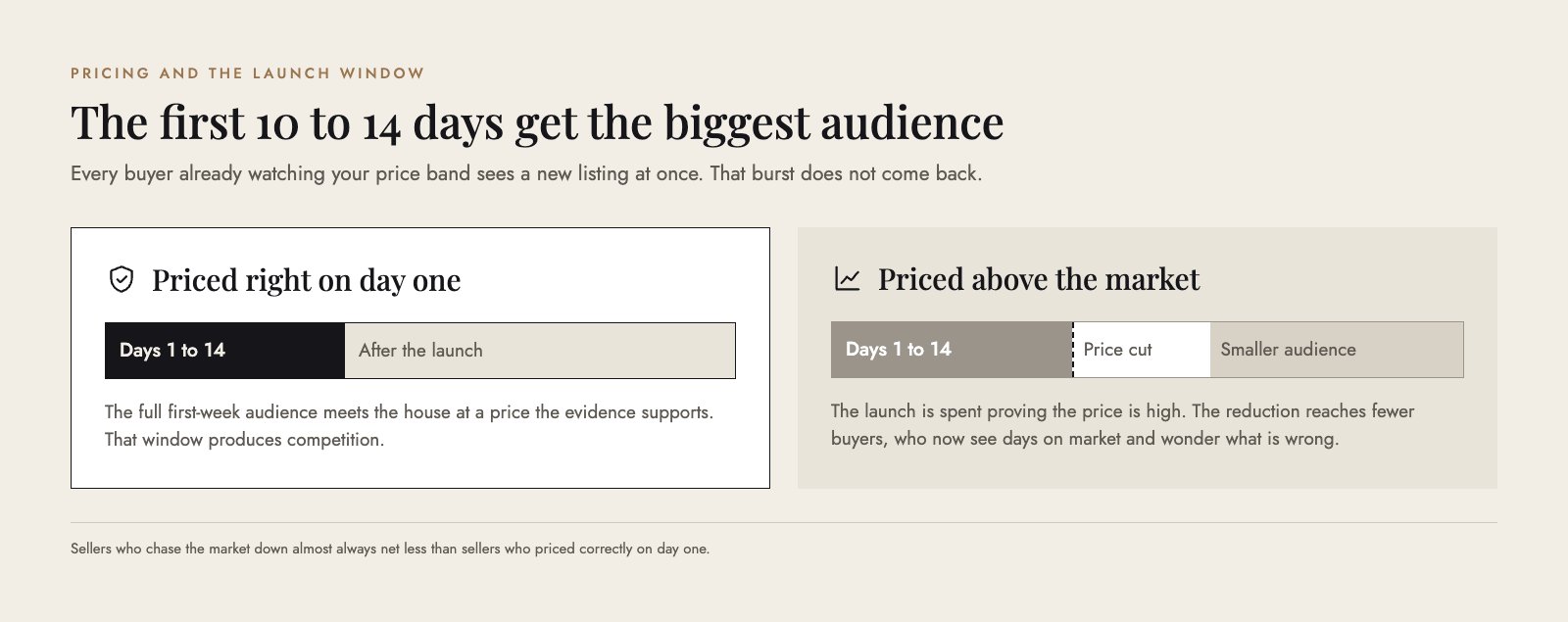
The MLS carries the closed price, the concessions, the days on market, the condition, the photos, and the history of price changes. That is the raw material for a real valuation. Without it you are guessing, and the two ways to guess wrong are both expensive. Too high and you sit, go stale, and eventually sell for less than you would have gotten with correct pricing. Too low and you leave money on the table on day one and never know it.
If you want to see how I think about this, I laid it out in what your home is actually worth in Leander.
Seller guide
Preparing, pricing and disclosing a Texas listing is covered step by step in the Texas home seller's guide.
The contract and the disclosure obligations
TREC promulgates the standard residential contract forms, and those forms are made for use by license holders. If you are selling on your own, the contract is generally going to come from the buyer's agent or from an attorney. That is not automatically bad, but understand the position: the person who drafted the document you are signing represents the other side.
Your disclosure obligation does not go away because you do not have an agent. Texas Property Code Section 5.008 requires a seller of a single dwelling unit to deliver a written disclosure notice to the buyer on or before the effective date of the contract. If you deliver it late, the buyer gets a right to terminate for any reason within seven days after receiving it. There are exemptions, including foreclosures, estates, some transfers between relatives, and new construction never previously occupied, but a normal resale is not exempt. The TREC resale contract form in use since July 1, 2026 includes a separate Seller's Water Disclosure with its own termination right. For what applies to your sale, ask a real estate attorney.
Filling that form out honestly and completely matters. Filling it out carelessly is how sellers end up in disputes over a roof leak they half remembered. More on that in seller disclosure requirements in Texas.
Filling that form out honestly and completely matters.
The option period and the inspection negotiation
Once you are under contract, the buyer typically has an option period, during which they can terminate for any reason at all. They will inspect. The inspector will produce a long report, because inspectors on new and old houses alike produce long reports.
Then the buyer's agent will come back with a repair request, and this is where FSBO sellers most often get taken apart. You are negotiating against someone who does this professionally, over items you do not have the context to evaluate, under time pressure, with your earnest money position at its weakest point.
The skill here is knowing which findings are actual defects, which are code-of-the-day items on an older house that no buyer can reasonably demand, and which are the inspector covering himself. If you do not know the difference, you will either concede too much or dig in on the wrong thing and lose the deal. I wrote about what an inspection covers and what it does not in this post on Texas home inspections.

Financing falling through
A meaningful share of contracts die on the buyer's loan, not on the house. The Third Party Financing Addendum gives the buyer an approval window to terminate with earnest money refunded if they cannot get approved, and a separate property approval provision that lets them terminate up to the third day before closing if the lender determines the property does not satisfy underwriting requirements, including the appraisal.
Which means that if you take an offer from a buyer who cannot actually close, you find out weeks later, with your house off the market the entire time and your own purchase possibly in jeopardy.
Vetting the buyer's lender is unglamorous and it is most of the job. Is the pre-approval from a real underwriter or is it an automated letter. Has the lender verified income and assets. Is the loan officer someone anyone has heard of. Will they take your call. A FSBO seller usually does not know what to ask and usually does not ask.
Marketing plan
What marketing for a listing should include is laid out on the marketing strategy page.
The buyer's agent still needs to be paid
Most buyers work with an agent, and that agent now has a written compensation agreement with their buyer, required by Texas law since January 1, 2026. That obligation exists whether you are involved or not.
So a buyer looking at your FSBO is doing arithmetic: purchase price, plus closing costs, plus whatever portion of their agent's compensation you are not contributing toward. If you contribute nothing, they will factor it into their offer price, or they will look at a different house where the seller does contribute.
The savings are therefore rarely the full amount people imagine. You are usually saving the listing side, not both sides.
Flat-fee MLS, honestly
Flat-fee MLS is the real middle option and I think it is underdiscussed. You pay a broker a set fee to enter your listing into the MLS so it syndicates out to the portals. You handle everything else.
What it solves: the reach problem, which is the biggest single gap in a FSBO. Your house gets in front of every agent with a buyer in your price band.

What it does not solve: pricing, because you still cannot see the full comp picture; showing logistics; the disclosure; the inspection negotiation; the appraisal problem; and lender vetting. You are also going to field calls from agents, and you are going to field a lot of calls from agents who want your listing rather than your house.
Read the flat-fee agreement carefully. Understand what happens if the listing needs to be changed, what the cancellation terms are, and whether anyone answers the phone when something goes wrong at eight days to closing.
How to decide
Ask yourself one question: do I have a marketing problem or not.
If the buyer is already identified, hire a title company and an attorney and keep your money. If you need the market to find you, be honest about whether limited exposure plus self-negotiation plus the buyer discounting for their own agent's compensation actually nets you more than a negotiated listing agreement would have. Sometimes it does. Frequently it does not, and the seller never runs the comparison because the alternative outcome is invisible.
If you want to see the full process from the other direction, I walked through it in how to sell your house in Leander.
Keep reading
Questions about this? Talk to Ken.
Call (737) 307-4848 or send Ken a message.
